Swami Ayucare Ayurveda logo

Treatment areas

A clear index of concerns supported through Ayurvedic consultation.

Every case begins with individual assessment. The list below describes broad care categories, not guaranteed outcomes.

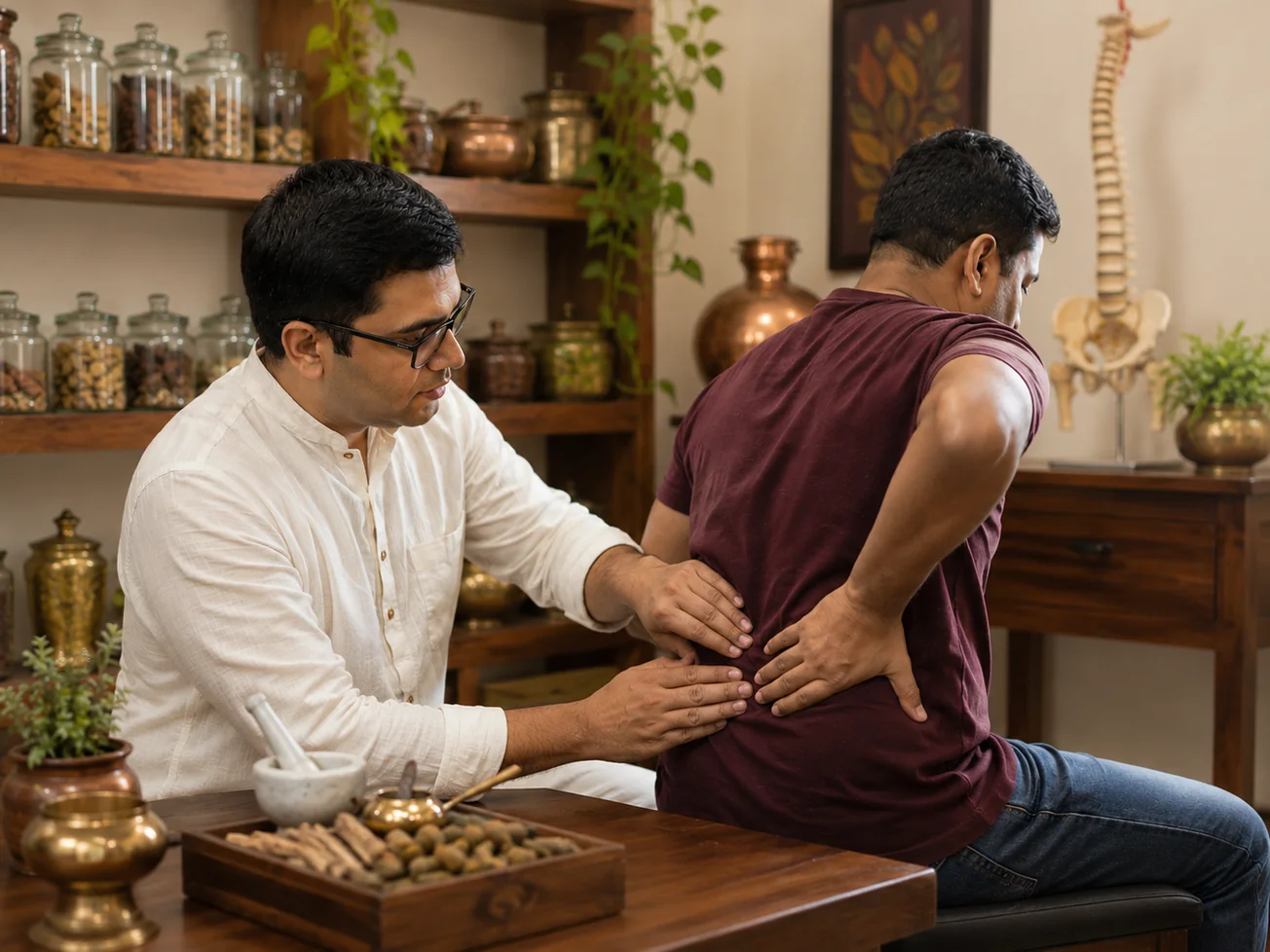
Ayurvedic consultation for pain, joints and spine concerns
01

Pain, joints & spine

Consultation support for arthritis, spondylitis, sciatica, spinal disorders and backache. Assessment may include the location and nature of pain, stiffness, movement limits, work posture, sleep, digestion, weight, previous imaging and ongoing medicines.

The consultation may focus on:
  • Pain pattern, swelling and stiffness
  • Movement, posture and daily strain
  • Digestive and metabolic factors
  • Suitability for medicines and supportive therapies
  • When orthopaedic or emergency evaluation is necessary

Ayurvedic consultation for digestive health concerns
02

Digestive health

Ayurvedic consultation for hyperacidity, gastric problems and piles. Because digestive symptoms can have many causes, the doctor reviews food timing, appetite, bowel pattern, sleep, stress, medicines and warning signs.

The consultation may focus on:
  • Meal pattern and trigger foods
  • Appetite, bloating and bowel habits
  • Hydration, sleep and stress
  • Medication-related irritation
  • Need for tests or specialist referral
Ayurvedic assessment for respiratory and allergy concerns
03

Respiratory & allergy

Support for asthma, sinusitis, chronic cold and allergy-related concerns. Ayurveda may be used as part of a wider care plan, but breathing difficulty, severe wheezing or sudden symptoms require appropriate medical attention.

The consultation may focus on:
  • Frequency and triggers
  • Seasonal patterns and environment
  • Sleep, digestion and immunity-related history
  • Current inhalers or allergy medicines
  • Red flags needing urgent care
Women’s health consultation at an Ayurveda clinic
04

Women’s health

Ayurveda gynecology support, including infertility-related consultation. Women’s health concerns often require reports, scans and coordinated care, so patients should bring complete medical documentation.

The consultation may focus on:
  • Menstrual pattern and symptoms
  • Hormonal and metabolic history
  • Previous fertility evaluation or treatment
  • Diet, sleep, stress and weight pattern
  • Coordination with gynecology or fertility specialists
Ayurvedic consultation for cardiac, metabolic and neurological concerns
05

Cardiac, metabolic & neurological concerns

The supplied treatment list includes heart problems, blood pressure and paralysis support. These concerns require careful medical supervision. Ayurveda may be considered only as supportive care and should not replace emergency or specialist treatment.

Important:
  • Never stop blood pressure, heart, diabetes or neurological medicines without medical advice.
  • Bring recent reports and the exact medicine list.
  • Chest pain, sudden weakness, facial droop, speech difficulty or severe breathlessness require emergency care.
Ayurvedic consultation for skin, stress, vascular and wider concerns
06

Skin, stress, vascular and wider concerns

The clinic’s supplied list also includes cosmetic and skin ailments, stress and tension, varicose veins, child problems, height increase and specialised advisory. Each category has different limitations and may require referral or investigation.

The consultation may focus on:
  • Duration, triggers and previous diagnosis
  • Current medicines and skin products
  • Sleep, stress, digestion and routine
  • Age-appropriate expectations in children
  • When dermatology, vascular, paediatric or specialist care is needed

How treatment is planned

A combination chosen for the individual—not a fixed package.

Ayurvedic medicines

Medicines are selected after assessment. Patients should follow the prescribed dose and timing rather than self-adjusting.

Pathya-apathya

Diet and routine guidance is intended to support the treatment plan. It should be practical, clear and adjusted where necessary.

Panchakarma support

Therapies may be advised when appropriate. Suitability depends on the condition, age, strength and current health status.

Follow-up

Progress is reviewed through symptom changes, tolerance, adherence and relevant reports. Treatment may be modified over time.

Before your appointment

Bring enough information to make the consultation useful.

  • Recent laboratory reports and scans
  • Previous prescriptions and discharge summaries
  • Current medicine strips or a written medicine list
  • Details of allergies or previous medicine reactions
  • A short timeline of symptoms and major changes
  • Questions you want the doctor to address

Do not delay emergency care while waiting for an Ayurveda appointment.

Treatment FAQs

Important points before beginning care.

Can Ayurveda be taken with my current medicines?

Sometimes treatment can be coordinated, but the doctor must know every medicine and supplement you take. Do not combine or stop medicines on your own.

How quickly will I see results?

No responsible clinic can guarantee a fixed timeline. Response depends on the condition, duration, severity, consistency, lifestyle and individual factors.

Will I need tests?

The doctor may review existing tests or advise further evaluation when symptoms require it. Ayurveda should not be used to avoid necessary diagnosis.

Are all treatments natural and therefore risk-free?

No treatment should be assumed risk-free merely because it is natural. Correct medicine selection, dose, quality and clinical supervision remain important.

Can children and older adults take treatment?

They may be assessed, but treatment must be age-appropriate and adapted to strength, current health, medicines and medical supervision.

Treatment begins with suitability—not assumptions.

Ayurveda is personalised. Not every medicine or therapy is appropriate for every person, and a consultation is necessary before planning care.